Given the costs from the Covid crisis, could not have state responses been less damaging to supply chains?
 Time was when only the rich could buy imported goods. Today, the reverse is almost true. In achieving this, one could be forgiven thinking that the powers at be are now in an alliance with environmentalists to create a world in which products and services are only affordable to the affluent few.
London's Drewry Maritime Research now questions whether current container crisis means an end to low-freight cost assumptions. “Ocean carriers alone cannot remediate the current problems in the short term, and shippers will have to adapt their medium-term strategies,” say Drewry analysts, reports Mumbai's Indian Transport & Logistics News.
Parallel to this is what appears to be a campaign to have everyone believe in what they know not to be true, that is, what they can plainly see is no longer so because expert elites believe in the counterintuitive. And now the counterintuitive must be true.
Like the existence of a climate "emergency" for example, which few can see but experts, or racism that is seen to be rampant, are to be taken as undeniable facts, according to the media academic bureaucratic complex.
But experts refuse to engage in any discussion of doubts except with those who already agree with them. Numbers issued are meant to scare into compliance rather than inform. Some numbers have been doctored to make them more scarifying.
Normal flu deaths were lumped in with Covid deaths to make Covid more of a threat that it was. All are urged to get vaccinations that don't vaccinate and must be augmented with re-vaccinations called boosters.
Covid is the core of the supply chain problem. Not only Covid, that is Covid in and of itself, but the government response to it. Left to its own devices, Covid might have run its course much the way the Hong Kong flu did in 1968-69 when it killed 100,000.
Granted, Covid, which kills the very sick and the very old, kills many more today than Hong Kong flu did 50 years ago. But that is because the big population bulge back then was in its 20s. Today, that same group is pushing 70 and more likely to suffer from co-morbidities and simply die in the natural course of things. No one is surprised if the death rate is considerably higher among than cohort of aging war babies and baby boomers except those who want to keep the Covid crisis ball on the hop.
Covid's impact on shipping has been critical. It might be described as the "log that broke the camel's back" but it was an already heavily laden camel.
But it occasioned a massive increase in the price of shipping laden containers, up 547 per cent more than the seasonal average over the last five years. The cost of shipping a TEU to Europe from Shanghai ranged from GBP5,736 (US$7,605) to GBP9,112. However, the cost of shipping a TEU container back to Shanghai from Europe was significantly lower, averaging between GBP805 to GBP1,117. This is a symptom of the reduced supply of containers in China, which drives up the cost of securing affordable shipping.
At first, when the global Covid crisis hit last in 2020, there has been a strain on supply chains. Due to Covid, initial economic uncertainty and localised lockdowns led to reduced consumer demand for many goods.
But when restrictions began to ease and, consumer savings over lockdowns were rapidly spent on goods, What was once spent on social nights out, now went to products obtained through now burgeoning ecommerce channels.
This led to greater sales of products rather than services. London's Drewry Maritime Research warned: “More than 80 per cent of shippers reported serious issues with lack of shipping capacity, poor schedule reliability, and high freight rates.
“Furthermore, 40 per cent of shippers said that they are considering sourcing or exporting from a more local/regional location – a policy decision with the potential to substantially impact carriers’ future deep-sea network and TEU-mile demand,” said Drewry.
Ocean carriers did not appear to have short-term, contingency plans that can resolve the current market imbalances, other than attempts to stabilise schedules.
Said VesselsValue head trade analyst Charlotte Cook: “We are seeing staggeringly high levels of congestion outside key import and export container hubs with a total of 2,661,942 TEU currently waiting globally.
“With increased shipping expenses as a result of extended idling times and profit margins being squeezed in the shipping sector, we could see these costs trickle down to the consumer,” said Ms Cook.
Overlooked here are other facts, not directly linked to Covid by aggravated by the official response to what may fairly be called a man-made crisis, a collection of responses and standing regulations that did more harm than good. That in all likelihood, it would have been better had nothing been done at all.
If this was the log that broke the supply chain camel's back, let us consider what this overburdened beast was carrying. First there, is the megaship problem that dumps 5,000 containers, from four cranes working at a rate of a box per three or four minutes, rapidly piling up on the docks to be picked up by trains and trucks. And there are scores of ships waiting to unload at major ports and tens of ships waiting a secondary ports.
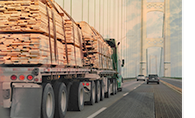
But unlike 5,000 taxis at the airport able to pick up any old passenger who hails them, each truck has come to pick up a particular container. And chances are the box the trucker wants is at the bottom of a distant stack, which must be dismantled to get at the box he wants and then having all the boxes put back. And while waiting for his box, the trucker and his truck get in the way of other waiting truckers and trucks, who are all not getting paid while they wait because they are only paid for delivery of the box they were sent to get.
And that is just one of the reasons so many are leaving trucking.
It's little better at the nearby railyards, because the problem the gateway port is transferred inland. Picture a double-stacked train from LA- Long Beach or Rotterdam and Duisburg as giant pythons that have swallowed a large animal like a deer whole. Pythons lie about for the better part of a year to digest it. That's fine for pythons, but the railway python is forced to swallow deer after deer as each mega ship dumps indigestible masses of containers repeatedly. As we get to railyards across a vast hinterland, there to repeat the same problem with waiting trucks looking for they were sent to secure and deliver.
It is all very well for know-nothing President Joe Biden to direct all ports and harbours' work on a 24/7 basis, but under union contracts two out of three longshoremen already earning about US$100,000 a year will be put on double and triple time because they have a strangle hold on who gets into the union and union membership is the only way to get a job on the waterfront.
This is just one of the reasons why the price of consumer goods risk being put out of reach of the average consumer and made the exclusive preserve of the affluent few.
A combination of union contracts and government regulations, plus Covid lockdowns and slowdowns are making life more difficult and many times more expensive for most consumers worldwide from Kalamazoo to Timbuktu. |