What's happening in Europe
Eng |

Robots will take the hardest jobs in the supply chain
In 2026, that resistance is breaking. Robotic container unloading automation is moving from pilot projects to mass deployment, forcing giants like UPS and DHL to spend heavily in pursuit of speed, safety and return on investment. UPS has committed US$120 million to acquire 400 Pickle intelligent unloading robots as part of its $9 billion automation programme. The rollout is scheduled to reach major hubs by the end of 2026. DHL, meanwhile, has announced plans to deploy more than 1,000 Boston Dynamics Stretch robots worldwide by 2030. These are not experiments. They are capital accelerations, signalling that the industry’s toughest manual task is finally being automated at scale. The breakthrough lies in integration. Mobile chassis, AI vision and robotic arms now work in concert. Performance data is compelling. Robots can unload 700 to 800 cartons per hour, cutting the time for a single vehicle to about two hours. That represents a throughput increase of 35 per cent compared with human labour. Accuracy is equally striking. Trials of the CARGO system in 2026 showed a 97 per cent success rate in handling mixed, irregularly stacked goods. Safety is built in. Lidar and sensors allow robots to stop instantly when humans enter the platform, reducing risk and enabling flexible deployment. For logistics strategists, the appeal is not just technical. It is financial. The ROI logic is unusually sharp. Unlike many automation projects, robotic unloading does not demand wholesale redesign of facilities. Units can drive directly into existing container operations. That minimises hidden costs and accelerates adoption. Labour savings are immediate. The machines fill a gap in heavy manual work, reducing the number of people required for unloading. Industry measurements show a payback period of 18 to 24 months. In a sector facing chronic labour shortages, that is decisive. UPS and DHL are not alone. Across the industry, container unloading automation is being treated as a must-have. The economics are too strong to ignore. A system that pays for itself in less than two years is rare in logistics. The technology also addresses regulatory and social pressures. Worker safety, fatigue and turnover have long plagued unloading operations. Robots offer a solution that is both efficient and compliant. The wider implications are significant. Automation is no longer confined to sorting centres or conveyor belts. It is entering the most physically demanding corner of the supply chain. That shift changes the calculus of network design. Faster unloading means faster vehicle turnaround. Higher accuracy means fewer errors downstream. Safety systems mean fewer accidents and claims. Together, these factors reshape cost structures and service levels. Critics point to upfront expense. A $120 million outlay is not trivial. But in a $9 billion automation strategy, it is a calculated bet. DHL’s global plan for 1,000 robots by 2030 is equally ambitious. Yet both companies are betting that the combination of throughput, accuracy and safety will justify the spend. The payback data suggests they are right. The timing is also strategic. In 2026, logistics firms face rising demand from e-commerce, volatile trade flows and geopolitical uncertainty. Labour markets remain tight. Automation offers resilience. By removing the most difficult manual task, companies gain flexibility to redeploy workers and stabilise operations. Robots do not call in sick, strike or tire. They deliver predictable performance in unpredictable times. Technology vendors are racing to capture the market. Pickle Robot and Boston Dynamics are leading, but others are close behind. The competitive landscape is widening as investors see the potential for rapid scale. Research platforms highlight the integration of mobile manipulators and AI vision as the core innovation. Industry reports emphasise the transformative impact on logistics economics. The narrative is consistent: container unloading is no longer immune to automation. For the supply chain game of 2026, this is a turning point. Automation has moved from concept to capital acceleration. The hardest job in logistics is being mechanised, and the giants are paying to make it happen. The ROI logic is clear. The technology is proven. The deployment is underway. In less than two years, robots are expected to pay for themselves, and in the process, redefine the economics of global logistics. The lesson is simple. When automation cracks the toughest nut, the industry follows fast. Container unloading was the last frontier. In 2026, it is becoming the proving ground for a new era of robotic logistics. UPS and DHL are spending heavily not because they want to, but because they must. The supply chain bottleneck is breaking, and the robots are driving through. |
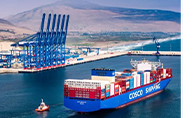 Container unloading has always been the stubborn bottleneck in logistics. Heavy, repetitive, and unpredictable, it resisted decades of mechanisation.
 Europe Trade Specialists |
Visible & Strategic Logistics
More....