World shipping must now face new geopolitical and technological realities
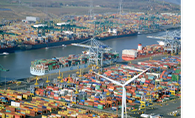 World shipping today stands at the intersection of geopolitical upheaval and technological transformation. The industry has shown resilience, with ports worldwide posting positive tonnage figures despite tariffs and embargoes on strategic goods. World shipping today stands at the intersection of geopolitical upheaval and technological transformation. The industry has shown resilience, with ports worldwide posting positive tonnage figures despite tariffs and embargoes on strategic goods.
Yet beneath these numbers lies a shifting landscape shaped by a cold war dynamic between China, Russia and the West. America has taken an aggressive stance, Europe remains divided, and China speaks of peace while building arms and signalling its intent to invade Taiwan. Beijing’s defiance of the Hague Court ruling on the South China Sea, and its harassment of Philippine shipping, underscores the risks to maritime stability. Vietnam and Brunei also reject China’s claims, but the pattern of coercion remains. In response, Washington has revived the Monroe Doctrine, asserting hemispheric influence and deploying economic and military power to counter perceived threats.
These threats are not abstract. America faces 80,000 fentanyl overdose deaths annually, disproportionately affecting men from low-skilled jobs, many of them ex-military. Illegal immigration has compounded the strain, with millions entering during the Biden years. Europe and the UK face parallel challenges, with an influx of migrants—often young men of military age—fuelled by leftist governments.
The assumption that nuclear deterrence will keep the peace, as it did during Soviet times, is undermined by the Russo-Ukrainian conflict. This war, fostered by outgoing Democrats and European socialists, has destabilised the balance. MAGA Republicans now reject such entanglements, but volatility remains.
For shipping, this means uncertainty. Trade flows are increasingly redirected away from China toward South and Southeast Asia. The Trump administration’s reindustrialisation drive may create jobs, but not enough to absorb displaced workers or ensure congressional dominance. Europe and the UK remain in political stasis with elections years away.
International shipping is left to adapt. Less cargo will originate from China, more from alternative Asian economies. To stabilise domestic labour markets, Trump has pledged to deport 13 million illegal immigrants. Yet in his first year, only 128,000 were removed. With ICE employing just 6,000 enforcement officers, a corps of 20,000–30,000 will be needed.
This effort could create jobs, redirecting funds from climate programmes to enforcement. Retail prices need not rise if efficiency gains are realised. Remote work, born of the Covid era, is now a preference. Artificial intelligence will expand, and redundant office space will be converted into housing. These shifts reduce demand for physical transport, as proximity and digitalisation meet consumer needs.
The overarching principle is clear: reduce expenditure without reducing quality of life. Technology must be unleashed, even at the cost of casualties. Self-driving cars, trucks, trains and ships must be embraced. Progress cannot be paralysed by endless inspections. Elon Musk’s frustration with California’s high-speed rail illustrates the problem: permission delays outlast construction timelines. Consider London Heathrow’s third runway. Proposed in 2007, promised for 2035, it will take 23 years to build a strip of tarmac. Such inertia is unacceptable. Shipping must demand faster approvals and risk-tolerant innovation.
Shipping will continue to rely on mega vessels for long hauls, complemented by smaller feeder ships to distribute cargo to trucks and trains. This hub-and-spoke model balances efficiency with flexibility.
Yet the industry must also recognise the rise of new consumers. Extreme poverty has declined worldwide, creating middle classes in developing nations. These emerging consumers will drive demand for shipping services, offering growth opportunities beyond traditional markets.
World shipping faces geopolitical turbulence, domestic labour challenges, and technological disruption. Yet these are not threats alone - they are opportunities. By embracing alternative trade routes, supporting enforcement that stabilises labour markets, and unleashing technology, shipping can thrive. The industry must accept risk, demand faster approvals, and invest in innovation. It must recognise new consumer markets and adapt to shifting geopolitical realities. The cold war may persist, but shipping can chart its own course—one of resilience, efficiency and growth. |