Deploying poverty: Why shipping must anchor in waters of frugality
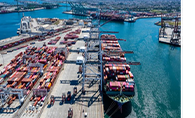 Shipping is the hidden architecture of everyday life. It is the cheapest way to move goods across oceans, the backbone of inland corridors, and the quiet enabler of affordable access to food, medicine, and consumer staples. Shipping is the hidden architecture of everyday life. It is the cheapest way to move goods across oceans, the backbone of inland corridors, and the quiet enabler of affordable access to food, medicine, and consumer staples.
If poverty is to be survivable rather than miserable, shipping must be placed at the centre of the system. Poverty can be deployed as a constraint - frugality as a design principle - but only if logistics deliver essentials cheaply and reliably to where people live.
The conventional wisdom insists poverty is a scourge to be eradicated. Politicians promise its elimination, economists model its decline, and social activists campaign against its persistence. Yet poverty endures, stubbornly, across continents and generations. Perhaps the more radical question is not how to abolish poverty, but how to deploy it — to treat frugality as a design constraint, and to build systems where modest means still buy decent lives.
This is not a call to glorify deprivation. It is a recognition that the bottom fifth of society will always exist, and that their quality of life depends less on income than on access. The decisive factor is logistics: how cheaply and reliably food, medicine, and goods reach people, and how close homes are to schools, clinics, and shops. Shipping - by sea, land, and air - is the hidden architecture of that access. Put shipping at the centre, and poverty becomes survivable, even tolerable.
Consider the lived experience of Hong Kong or Montreal. Apartment living there is not a mark of failure but of convenience. Proximity to amenities trumps the suburban dream of a detached house on a distant lot. Politicians in North America and Europe still extol home ownership, but for most citizens it is unattainable. The better bargain is a flat near transit, where quality of life comes from density, not acreage.
Density is not just a housing solution; it is a logistics multiplier. When people live close together, shipping networks can deliver cheaply. Megaships of 15,000 to 24,000 TEU take on cargo at Asian hubs like Singapore or Hong Kong, and feeders deliver imports to spoke ports from Karachi to Cebu and take on exports. Barges and trains carry containers inland from Europe’s Northern Range ports into the “blue banana” corridor of dense consumption. In the United States, Panama routings land cargo closer to end markets than costly west coast overland hauls. The pattern is clear: the closer freight lands to consumers, the lower the shelf price, the higher the quality of life.
The lesson extends to the last mile. Autonomous trucks, drones, and GPS‑directed addresses will dominate delivery. Debit and credit rails lubricate small transactions; ATMs recharge balances. Remote work, proven during Covid, reduces commuting demand. Communication supplants transport, cutting distances further. Fewer cars are needed in dense cities, and private ownership will decline. Poverty deployed as frugality means designing systems where modest incomes stretch further because distances are shorter and overheads lower.
This requires deregulation with discipline. Empty office towers should be converted into flats quickly, without years of bureaucratic delay. Inspectors can grade safety, but approvals must be fast and predictable. Day care centres should open without labyrinthine permits. Small firms should hire locally without red tape.
Global trade patterns reinforce the argument. Asia–Europe flows will continue through Suez. Asia–America flows will decline as the US boosts domestic production, but Panama will gain share. Africa and South America remain question marks, but corridors to inland cities with barge and rail spines could lift local markets. The point is not to chase riches but to stabilise access. Shipping is the cheapest way to move goods; density reduces distances; deregulation speeds conversion; automation trims costs. Together, they raise quality of life without raising incomes.
Policy must follow. Invest in hub ports, inland dry ports, and feeder networks. Standardise office conversions. Publish dwell times and slot prices. Licence autonomous pilots. Train workers for logistics jobs. Transparency and speed are the watchwords. Judge success not by GDP per capita but by shorter distances, lower delivered prices, and lives lived closer to what matters.
The conventional wisdom says poverty must be eliminated. That is noble but unrealistic. A more practical goal is to design systems where poverty does not mean misery. Shipping, density, and deregulation can make that happen. Poverty deployed as frugality is not a curse. It is a constraint that, if respected, can deliver decent lives for the masses. And shipping, from megaships to last‑mile drones, is the protagonist of that story - the infrastructure that turns frugality into prosperity.
For the shipping industry, this vision is not charity but opportunity. Urban density and frugal consumption patterns translate directly into higher volumes of containerised trade, more predictable flows, and stronger demand for efficient hub‑and‑spoke networks. When populations concentrate in apartments near amenities, the logistics equation shifts in favour of frequent, smaller shipments that keep shelves stocked. That means more feeder services, more barge movements, and greater reliance on short‑sea shipping — all areas where carriers can expand capacity and capture margin.
Global operators benefit from the stability of demand. Even if incomes remain modest, the need for consumables, foodstuffs, and household goods persists. By designing systems where poverty does not mean misery, shipping companies secure a steady base load of cargo. Megaships on Asia–Europe and Asia–America routes continue to fill, while inland ports and regional feeders see rising throughput. Automation at terminals and in last‑mile delivery creates new service niches for carriers willing to integrate vertically.
In short, deploying poverty as a design constraint ensures shipping remains indispensable. It locks logistics into the heart of everyday life, guaranteeing relevance and resilience. For carriers, forwarders, and port operators, this is not a social programme - it is a durable business model. |