Trump to deploy commercial muscle not military might to get his way
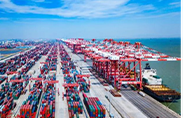 One of the unintended consequences of the changes brought about by US President Donald Trump is that the shipping world has been forced to view global opportunities afresh. In a climate where military confrontation often dominates headlines, Trump’s approach suggests something different: a reliance on commercial leverage rather than military might to reshape international relations. One of the unintended consequences of the changes brought about by US President Donald Trump is that the shipping world has been forced to view global opportunities afresh. In a climate where military confrontation often dominates headlines, Trump’s approach suggests something different: a reliance on commercial leverage rather than military might to reshape international relations.
The Venezuelan raid, for example, had less to do with oil or fentanyl than with reviving the Monroe Doctrine of 1823, which declared the Americas off-limits to outside powers. In many ways, this was less about tactical gains than about signalling a return to 19th-century power politics. The rules-based order associated with Neville Chamberlain has given way to a temperament more reminiscent of Winston Churchill—assertive, pragmatic, and unapologetically nationalistic.
Victor Davis Hanson, a senior fellow at the Hoover Institution, has drawn historical parallels to the Thermidorian Reaction of 1794, which ended the French Revolution’s Reign of Terror and toppled Maximilien Robespierre. Hanson sees Trump and his MAGA Republicans as embodying a modern Thermidorian Reaction—a pushback against what they perceive as deepening state control over private life. From the rise of communism in Russia in the 1920s to the expansion of state welfare and regulation in the West, Hanson argues that a century-long “Reign of Error” has culminated in today’s sprawling “Deep State.” This amorphous complex of media, academia, and bureaucracy, he contends, instinctively seeks to expand its power, often at odds with half the electorate.
This dynamic has fractured the transatlantic alliance. Trump’s America no longer shoulders NATO’s burdens unquestioningly. The US remains committed to defending Europe if attacked, but its enthusiasm for the Russo-Ukraine war has waned compared with the Biden years. Instead, Washington is content to sell munitions and materiel to NATO members, replenishing their depleted stocks while upgrading its own arsenal to match China’s advances. The shift underscores a broader break between Trumpian America and the Western governing class, which critics accuse of eroding free speech, freezing opponents’ bank accounts, and undermining democratic norms.
Yet the populist tide is not confined to the US. Italy, Argentina, and Hungary have seen similar triumphs of popular will, while conservative movements challenge entrenched elites across Canada, the UK, France, Germany, the Netherlands, Belgium, and Romania. The political map of the West is increasingly contested, with nationalist and populist forces reshaping debates once dominated by centrist consensus.
For international shipping, the implications are profound. The bad news is that traditional markets are strained by costly conflicts between the US and China, and to a lesser extent between China and Europe. Trade lanes that once seemed secure are now subject to geopolitical turbulence. But the good news is that new opportunities are emerging in Africa and South America—regions rich in resources and eager for development. China’s Belt and Road Initiative has already invested heavily in infrastructure and extraction across these continents. Yet Trump’s commercial-first approach suggests the US may counter not with troops, but with trade deals and shipping muscle.
Trump’s critics often accuse him of bellicosity, but his instincts are not military. He is a businessman at heart, more likely to say: “Do business with China or do business with the US. It’s your call.” This framing positions commerce as the primary lever of influence. As the US seeks to re-industrialise after decades of outsourcing to China, sea trade patterns will inevitably shift. A cold war with Beijing will reduce flows, while warming relations with Moscow—once the Russo-Ukraine war ends—may open new routes. Trump envisions a US-flagged merchant fleet, though building one will take time. The era of Liberty Ships churned out by idle shipyards is long gone. Modern containerships can carry 24,000 TEU, but a practical US fleet would likely consist of vessels around 8,000 TEU. For comparison, a Liberty Ship converted to container service would hold fewer than 500 TEU.
Until such a fleet materialises, opportunities abound for non-Chinese carriers to fill the gap in Africa and South America. These regions are not only resource-rich but increasingly prosperous. Sub-Saharan Africa’s per capita income has risen 200 per cent, from US$575 in 2000 to US$1,750 in 2025. South America, excluding Venezuela, has seen a 120 per cent increase, from US$4,500 in 2000 to US$9,900 in 2025. These gains reflect growing consumer markets and expanding trade potential. If the “China door” is closing, the Southern Hemisphere may well be opening.
The shipping industry must therefore recalibrate. Traditional reliance on trans-Pacific and trans-Atlantic routes is no longer sufficient. Africa and South America represent the next frontier, not only for resource extraction but for consumer goods, technology, and services. Ports from Lagos to Buenos Aires could become hubs of a new commercial order, one shaped less by military alliances than by competitive trade networks.
Trump’s strategy, whether deliberate or instinctive, is to wield commercial muscle as a geopolitical tool. This approach may frustrate those who expect military intervention, but it aligns with broader trends. Globalisation has always been about trade flows, and in an era of contested power, commerce may prove more decisive than armies. The challenge for shipping is to adapt quickly, investing in fleets, infrastructure, and partnerships that anticipate this shift.
The world is entering a new phase of power politics—less about treaties and more about transactions. Trump’s America is not retreating from the world, but redefining its engagement. For shipping, the message is clear: look south, look to Africa and South America, and prepare for a future where commercial muscle, not military might, determines the balance of power. |