Navigating Arctic waters: Why Maersk and MSC dismiss the Northern Sea Route
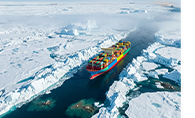 The allure of the Northern Sea Route (NSR) as a shortcut between Asia and Europe is undeniable, promising significantly shorter transit times and potential fuel savings for commercial shipping. However, despite a notable increase in activity in 2025, major global shipping lines such as Maersk and MSC continue to firmly reject its regular use. The allure of the Northern Sea Route (NSR) as a shortcut between Asia and Europe is undeniable, promising significantly shorter transit times and potential fuel savings for commercial shipping. However, despite a notable increase in activity in 2025, major global shipping lines such as Maersk and MSC continue to firmly reject its regular use.
This presents a complex paradox for logistics and shipping experts evaluating the route's true commercial viability and future prospects. The NSR, running along Russia's Arctic coastline, offers a journey that can be up to two weeks shorter than traditional routes via the Suez Canal, potentially cutting distances by 40-70 per cent. Proponents highlight the route's capacity to reduce fuel consumption and, consequently, emissions per trip.
In 2025, the Northern Sea Route witnessed increased activity, with 103 full transits by 88 vessels, transporting 3.2 million tons of cargo. This marked a slight increase from 97 transits in 2024. Container voyages, particularly those linking Russia and China, saw a rise, with some Chinese operators completing Asia-Europe runs in around 20 days, showcasing the route's time-saving potential.
Despite its promise, the Arctic environment presents formidable challenges. The NSR remains largely seasonal, with unpredictable ice conditions and a short open-water window, even in 2025. Persistent ice, especially in the East Siberian Sea, limited routing options for deep-draft vessels during last year's season. These variables directly impact the reliability and scheduling certainty crucial for global container shipping.
Moreover, the Arctic's remote nature means limited infrastructure, including support ports, emergency response capabilities, and diversion options. An accident in this fragile ecosystem could have catastrophic environmental consequences, and the absence of proper insurance and ice-class certifications for some vessels exacerbates these risks.
The firm stance taken by industry giants like MSC and Maersk, who, alongside CMA CGM and Hapag-Lloyd, have reaffirmed their commitment to avoid the NSR, underscores significant reservations. Their rejections are primarily rooted in a combination of environmental, operational, and economic concerns that outweigh the perceived benefits of a shorter route.
A primary driver for the rejection is the profound concern for the Arctic's delicate ecosystem. Major carriers cite the potential for increased black carbon emissions from vessels, which, when settling on ice and snow, accelerates melting and contributes to global warming. The risk of oil spills and other forms of pollution in remote, difficult-to-access waters, where cleanup operations would be exceptionally challenging.
From an operational standpoint, the NSR is considered underdeveloped for widespread commercial shipping, with safe navigation not consistently assured. The unpredictable ice, severe Arctic storms, fog, and poor visibility can lead to significant delays and interruptions, disrupting tight schedules. Furthermore, using the NSR necessitates specialized ice-class vessels, which have strengthened hulls and require specially trained crews, incurring higher operational costs. These costs are compounded by higher insurance premiums and mandatory icebreaker escort fees levied by Russian authorities.
While the NSR can shorten distances, it may not always translate into cheaper voyages. IMO regulations prohibiting heavy fuel oil in Arctic waters mean vessels must use cleaner, more expensive, fuels, which can create a cost disadvantage compared to traditional routes like the Suez Canal. MSC, for instance, has stated it has ample capacity and a global network to reliably transport cargo without needing to traverse the NSR.
Russia has emerged as the primary architect of Arctic shipping development, asserting control over the NSR and investing heavily in infrastructure, including an expanding fleet of nuclear-powered icebreakers designed for year-round navigation. Rosatom, Russia's State Atomic Energy Corporation, projected a 20 per cent growth in NSR cargo volume for 2025.
This push has seen increasing cooperation with China, which views the NSR as a strategically valuable alternative to reduce dependence on vulnerable maritime chokepoints. Chinese shipping operators have been actively expanding their Arctic operations, and Beijing has pledged investments in Russian Arctic ports and infrastructure. However, geopolitical tensions and sanctions continue to limit Western firms' engagement with Russian-controlled Arctic corridors, adding another layer of complexity to the route's broader commercial adoption.
While the Northern Sea Route offers undeniable benefits in terms of distance and time savings, its prospects for greater mainstream use in commercial shipping remain constrained by significant challenges. The rejections from major carriers like Maersk and MSC highlight critical concerns regarding environmental impact, operational reliability, and economic viability.
Until these fundamental issues are comprehensively addressed through advanced ice-strengthened vessel technology, robust emergency infrastructure, predictable ice conditions, and a globally accepted regulatory framework, the NSR is likely to remain a niche option, strategically important for specific trade flows, particularly between Russia and Asian partners, but not a replacement for established global arteries like the Suez Canal for the vast majority of international container shipping. |