Autonomy at sea, on road and rail is the new frontier
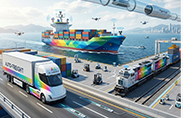 The shipping industry is watching closely as autonomous technologies move from pilot projects to commercial reality. In the United States, PlusAI is preparing its public debut after years of testing self‑driving trucks on Texas highways. The shipping industry is watching closely as autonomous technologies move from pilot projects to commercial reality. In the United States, PlusAI is preparing its public debut after years of testing self‑driving trucks on Texas highways.
In Europe, rail operators are experimenting with driverless freight trains on controlled corridors. And in Asia, Japanese yards are trialling fully automated coastal vessels, while European shipowners are fitting navigation systems that allow remote monitoring and semi‑autonomous operation.
These developments are not science fiction: they are the next stage in logistics, promising efficiency gains but also raising profound questions about labour displacement.
The prospect of artificial intelligence replacing human drivers, engineers, and even deck officers echoes earlier historical shocks when societies suddenly faced a massive influx of labour.
After the Napoleonic Wars, millions of soldiers returned to civilian life. After World War I, demobilisation released manpower into fragile economies. After World War II, tens of millions of veterans were reintegrated into booming industries. Each episode posed the same question: how do societies cope when a sudden change creates or releases vast labour capacity?
Keynesian economists and social democrats argue that post‑war recoveries demonstrate the power of government to absorb shocks. After 1945, the Marshall Plan, welfare expansion, and state‑led reconstruction created demand that soaked up labour.
In the United States, the GI Bill funded education and housing, smoothing reintegration. In Britain, the welfare state and nationalised industries provided employment and security. From this perspective, the lesson is clear: when technology or war displaces workers, governments must step in with spending, regulation, and social programmes.
The “roaring 20s” in the US are often cited as proof that pent‑up demand can unleash growth, but Keynesians note that Europe’s interwar experience was far less stable. Without sustained intervention, unemployment and unrest persist.
Applied to AI, the left argues that mass displacement will require public investment in retraining, safety nets, and industrial policy. Just as post‑war governments built housing and schools for veterans, today’s states must build digital infrastructure and education systems for displaced workers.
Milton Friedman, Friedrich Hayek, and Thomas Sowell offer a different reading. They argue that societies absorbed post‑war labour surpluses not because governments planned it, but because markets adjusted.
Friedman would point to monetary stability and pent‑up consumer demand after World War II. With savings accumulated during wartime rationing, households were ready to spend. Flexible markets allowed wages and prices to adjust, reallocating labour into civilian industries.
Hayek would stress the knowledge problem: no central planner could have orchestrated the re‑employment of millions. Instead, decentralised signals guided resources into reconstruction, consumer goods, and new technologies.
Germany and Japan rebuilt rapidly once price controls were lifted and markets allowed to function.
Sowell would highlight incentives and cultural capital. Veterans were motivated to work, study, and build families. Policies like the GI Bill succeeded not because they “created jobs” but because they rewarded effort and channelled manpower into productive roles.
Applied to AI, the right argues that the best policy is to let markets discover new uses for labour. Attempts to freeze technology or centrally manage displacement will fail. Instead, governments should ensure property rights, free entry, and competition, while avoiding disincentives to work.
The Napoleonic demobilisation was painful: unemployment, riots, and repression marked the 1810s. Industrialisation eventually absorbed labour, but slowly. World War I produced mixed outcomes: the US boomed, but Europe struggled with inflation and unrest.
World War II was different: reconstruction demand, new technologies, and institutional reforms created full employment. The contrast suggests that context matters. Where markets were flexible and demand strong, labour surpluses became growth. Where institutions were weak or policy misaligned, unemployment persisted.
The left insists that without state intervention, mass displacement leads to instability. The right counters that intervention distorts signals and slows adjustment. Both cite history: Keynesians point to the welfare state and Marshall Plan; Friedmanites point to consumer demand and market flexibility.
In truth, both are partly right. Post‑war recoveries combined state action and market dynamism. Governments provided frameworks—education, housing, welfare—while markets discovered new industries and absorbed labour. The boom was not purely planned nor purely spontaneous; it was a hybrid.
Autonomous trucks, trains, and ships will not create unemployment in isolation. They will release labour capacity, just as demobilisation did. The question is how societies channel that capacity. From the left: invest in retraining, digital infrastructure, and safety nets.
Ensure displaced workers have pathways into new industries. From the right: maintain flexible markets, avoid disincentives, and let entrepreneurs discover opportunities. Do not freeze technology or over‑regulate. From history: combine both. Post‑war societies succeeded when governments provided frameworks and markets provided dynamism.
For shipping, this means preparing crews and logistics workers for transition. Autonomous vessels will still need shore‑based monitoring, maintenance, and oversight. Ports will need digital operators. Freight forwarders will need AI‑literate staff. The labour released from traditional roles can be channelled into these new functions—if institutions and markets align.
Already, pilot projects show what is coming. In Norway, Yara Birkeland has trialled autonomous coastal shipping. In Japan, Mitsui OSK Lines has tested crewless navigation systems. In Europe, Deutsche Bahn has experimented with driverless freight trains. In the US, PlusAI’s autonomous trucks are running commercial trials.
These are not isolated experiments. They are the beginning of a transformation that will ripple across logistics. Just as demobilisation once released millions of soldiers into civilian life, AI will release millions of workers from traditional roles.
History shows that societies can absorb such shocks—if they combine state frameworks with market flexibility. The clash of titans—Keynesian intervention versus Friedmanite markets—remains unresolved. But the lesson of the past two centuries is that neither alone suffices. The post‑war booms were built on both government action and market dynamism.
The shipping industry, facing autonomous disruption, should remember that history. Autonomous trucks, trains, and ships will change logistics. Whether they bring prosperity or unemployment depends not on technology itself, but on how societies respond. |