 |
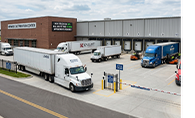
How to avoid high truck delays and detention times
Truck detention – the idle time drivers spend waiting for their trucks to be loaded or unloaded – is one of the most persistent obstacles to efficiency in logistics.
Surveys show that drivers can lose up to 29 per cent of their potential driving time to detention, a staggering figure that undermines productivity, profitability, and morale. If fleets are to thrive in an increasingly competitive environment, tackling detention must be a priority. 
|
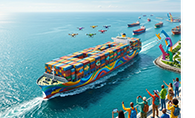 |
Restoring shipping to health means restoring freedom of the seas
International shipping today faces a crisis of confidence. Once the great enabler of global commerce, it now struggles under the weight of overcapacity, regulatory excess, and wavering demand from its traditional consumer bases in America and Europe. To restore shipping to good health, we must return to the principles that made it thrive: freedom of the seas, the natural balance of supply and demand, and a society that values productive work and the exchange of goods across oceans.
For centuries, shipping has been the lifeblood of civilisation. Men and women alike have depended on the movement of goods to sustain families, communities, and nations. At its core, shipping requires one simple condition: demand for goods produced in one place and consumed in another. In the last century, America and Europe provided the markets, Asia the factories, and the rest of the world the raw materials. That balance created prosperity. Today, however, the system falters.
|
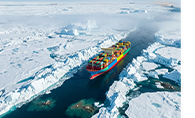 |
Navigating Arctic waters: Why Maersk and MSC dismiss the Northern Sea Route
The allure of the Northern Sea Route (NSR) as a shortcut between Asia and Europe is undeniable, promising significantly shorter transit times and potential fuel savings for commercial shipping. However, despite a notable increase in activity in 2025, major global shipping lines such as Maersk and MSC continue to firmly reject its regular use.
This presents a complex paradox for logistics and shipping experts evaluating the route's true commercial viability and future prospects. The NSR, running along Russia's Arctic coastline, offers a journey that can be up to two weeks shorter than traditional routes via the Suez Canal, potentially cutting distances by 40-70 per cent. Proponents highlight the route's capacity to reduce fuel consumption and, consequently, emissions per trip.
|
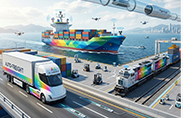 |
Autonomy at sea, on road and rail is the new frontier
The shipping industry is watching closely as autonomous technologies move from pilot projects to commercial reality. In the United States, PlusAI is preparing its public debut after years of testing self‑driving trucks on Texas highways.
In Europe, rail operators are experimenting with driverless freight trains on controlled corridors. And in Asia, Japanese yards are trialling fully automated coastal vessels, while European shipowners are fitting navigation systems that allow remote monitoring and semi‑autonomous operation.
|
|
|
Mediterranean & Africa
Trade Specialists |
|